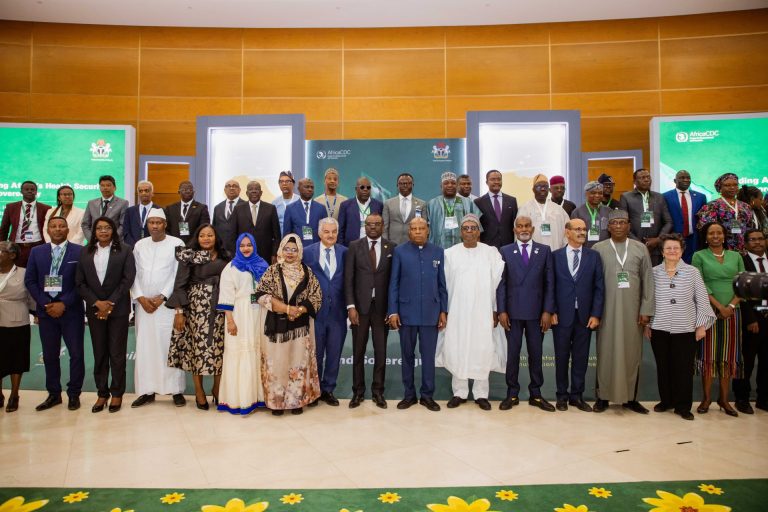
Addis Ababa, 14 February 2026 – African Union (AU) Ministers of Health and Finance, together with Heads of Delegation, have called for urgent and sustained investment in Africa’s health workforce, including to build a two-million-strong community health worker (CHW) workforce by 2030.
Leaders said the investment is critical to strengthen Africa’s health security and sovereignty (AHSS) and accelerate progress toward Universal Health Coverage (UHC).
Speaking on behalf of the AU Champion for Human Resources for Health and Community Health Delivery Partnership, H.E. President Bola Ahmed Tinubu, H.E. Kashim Shettima, Vice President of Nigeria, said: “Africa cannot achieve universal health coverage or protect its people from pandemics without investing in its health workforce”. He added that, “Sovereignty without standards is not sovereignty; it is exposure to risk” he said.
Despite carrying more than 25% of the global disease burden, Africa faces a severe shortage of health workers.
The World Health Organization projects a shortfall of over six million health workers by 2030, threatening progress in immunisation, outbreak detection, and the delivery of essential primary health care, including maternal and child health, chronic disease management, and access to preventive and curative services. Closing this workforce gap is essential for achieving universal health coverage and improving health outcomes across the continent.
In his remarks, Prof. Muhammad Ali Pate, Coordinating Minister of Health and Social Welfare, reported that Nigeria is committed to leading by example: “By 2027, we aim to deploy 100,000 salaried Community Health Workers nationwide, integrated within our state health systems and reiterated the call for community health workers (CHWs) to be formally recognised, regulated, professionalised and integrated into national health systems.”
Africa CDC’s Continental Health Workforce Investment Case shows that every US$1 invested in the health workforce yields up to US$19 in economic returns, while inaction could cost the continent an estimated US$1.4 trillion by 2030. An estimated US$4.3 billion annually is required to build a two-million-strong CHW workforce by 2030.
“The evidence is unequivocal: investing in Africa’s health workforce is not a cost, but a strategic investment in health security and economic resilience,” said Dr Jean Kaseya, Director General of Africa CDC.
The Commission is committed to building a stronger health workforce by working closely with partners and Member States to address key challenges.